Thinking about buying a historic home in Winter Park? It is easy to fall for the charm first and ask questions later. If you are looking in 32789, understanding how Winter Park defines historic homes, what architectural styles you may see, and what ownership really involves can help you make a smart decision. Let’s dive in.
What Historic Means in Winter Park
In Winter Park, a home is not considered historic just because it is old. The city generally looks for a property to be at least 50 years old and to have architectural, aesthetic, or historical value. The Historic Preservation Board also uses National Register criteria as a guide.
That matters because Winter Park has a broad historic fabric. The city says it includes both large estate homes and more modest bungalow neighborhoods, and it has recorded more than 700 historic structures. In other words, historic homes in 32789 come in more than one size, style, and price point.
Several historic areas appear on the city’s district map, including College Quarter, East Virginia Heights, Downtown, and Interlachen. The Downtown Winter Park Historic District along Park Avenue is especially notable for its connection to early settlement, architecture, commerce, community planning, and transportation.
Local Designation vs National Register
This is one of the most important distinctions for buyers. A property being listed on the National Register is not the same as being locally designated by the City of Winter Park.
According to Florida’s Division of Historical Resources, National Register listing by itself does not place obligations on a private owner or restrict the owner’s basic right to use or dispose of the property. In Winter Park, local designation is what triggers the city’s preservation review process.
If you are considering a historic home, you will want to confirm whether the property is locally designated, located within a local historic district, listed on the National Register, or some combination of the three. That one detail can shape how future exterior projects are handled.
Common Architectural Styles
Winter Park’s historic architecture reflects both its late-1800s resort origins and its major growth period in the 1920s. The city’s architectural survey found that the most common styles from 1904 to 1930 included Bungalow, Colonial Revival, Spanish Colonial, Mediterranean Revival, and Mission Revival.
If you are touring homes, it helps to know the visual cues that often define each style.
Bungalow and Craftsman
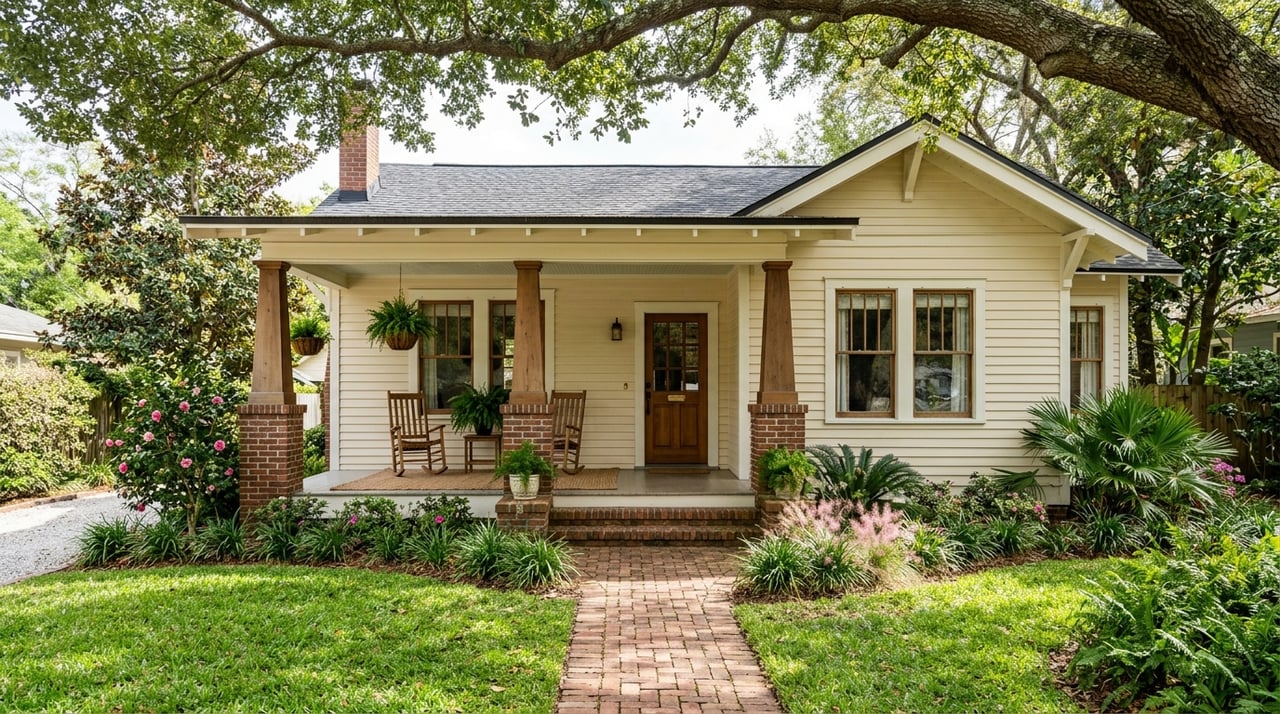
These homes often feature one-and-one-half-story forms, lower rooflines, porches tucked under the roof, and prominent dormers. Winter Park’s survey notes that many vernacular versions appear throughout areas such as College Place and Hannibal Square.
For buyers, these homes often offer warmth and personality in a smaller footprint. Original details can be a major draw, especially when they have been preserved rather than covered up.
Colonial Revival
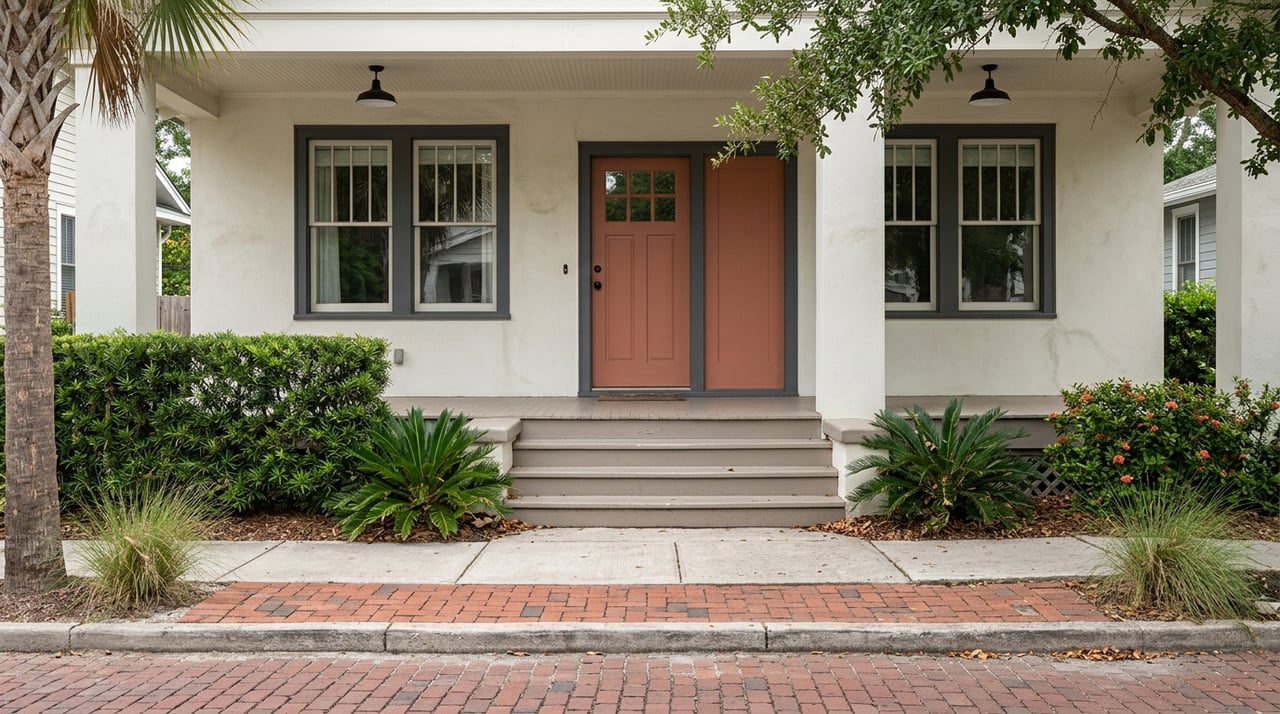
Colonial Revival homes are often easy to spot because of their symmetry. You may see centered front doors, balanced window placement, and porches or porticos that give the facade a formal look.
In Winter Park, this style ranges from smaller cottages to larger estate homes. That variety makes it one of the more flexible historic categories in the local market.
Spanish Colonial and Mediterranean Revival
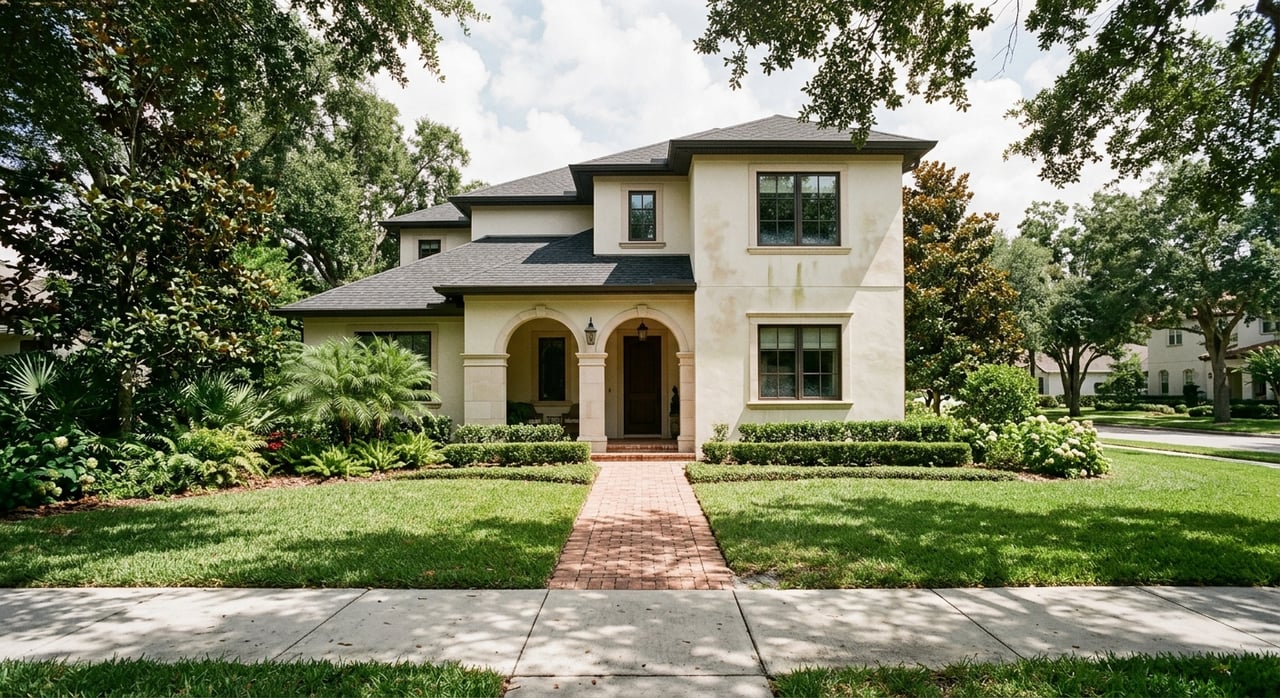
These styles are part of the classic Florida historic look. Common features include stucco walls, shallow-pitched roofs, barrel tile, arched openings, and decorative tile accents.
Winter Park’s survey says these homes are especially visible in larger lakefront villas, though smaller vernacular versions also appear across the city. If you are drawn to this style, exterior materials and roof details are often a major part of the home’s character.
Mission Revival
Mission Revival shares some of the same stucco-and-tile vocabulary as Spanish Colonial and Mediterranean homes. It fits naturally within Winter Park’s early 20th-century architectural story.
For a buyer, the key point is not just style recognition. It is understanding which features make the house feel authentic, because those are often the very details worth preserving.
Renovation Rules Buyers Should Expect
If a property is designated historic locally, exterior changes are reviewed through Winter Park’s Certificate of Review process. The city reviews exterior additions and alterations, while interior remodeling is not reviewed.
That said, many buyers still choose to protect original interior elements such as heart pine floors, built-ins, cypress paneling, and older fixtures. Even when the city does not regulate those features, they can be part of what gives the home its lasting appeal.
For exterior work, Winter Park says changes should be compatible with the existing architecture. Additions are often best placed on secondary facades, kept in scale, and designed so that character-defining features are not changed, destroyed, or hidden.
This does not mean you must freeze the home in time. In fact, Winter Park says designation does not require owners to restore a property or make changes to it. It does mean that visible exterior work may involve more planning and a more deliberate review process than you would expect with a newer home.
New Construction in Historic Areas
Some buyers assume historic districts mean every house must look old. That is not how Winter Park approaches it.
The city allows new construction in historic districts, and it does not require new homes to imitate historic architecture. Instead, the goal is for new construction to complement the district’s height, materials, roof form, massing, setback, and rhythm of openings.
That is helpful if you are comparing a renovated historic home with a newer home in a historic area. The neighborhood context may still feel cohesive even when the architecture is not identical from house to house.
Maintenance Matters More in Older Homes
Older homes in Florida usually come with a different maintenance profile than newer construction. Age is one factor, but climate is the other big one.
One issue to keep in mind is lead-based paint. The EPA says homes built before 1978 are more likely to contain it, and renovation or repair work can create harmful lead dust if lead-safe work practices are not used. If you are planning updates to a pre-1978 home, this is something to address early.
Termites are another major concern in Florida. The Florida Department of Agriculture and Consumer Services says subterranean, drywood, and dampwood termites are all found in the state. EPA guidance also notes that proper grading and drainage, which help keep the foundation dry, are part of termite prevention.
UF/IFAS adds that termite prevention should be part of a general home maintenance plan and may include periodic inspection by a trained and licensed termite inspector. For buyers, this reinforces a simple point: inspections are not just a checkbox when you buy an older home. They are part of understanding what you are really purchasing.
What to Look For During Due Diligence
When you are evaluating a historic home in Winter Park, a standard showing is only the beginning. You want to understand both the beauty you can see and the conditions you cannot.
A strong due diligence approach may include:
- A general home inspection
- Targeted follow-up for moisture intrusion concerns
- Review of termite risk and inspection history
- Lead-safe renovation planning for pre-1978 homes
- Confirmation of whether the property is locally designated or in a historic district
- Review of past exterior changes and whether they appear consistent with city review standards
In many cases, the most appealing historic homes are the ones where the original structure remains intact and the maintenance history is easier to track. Cosmetic updates can be attractive, but they should not distract from core condition questions.
Value and Tax Questions
Many buyers wonder whether historic designation affects value. Winter Park’s preservation materials take a positive view of preservation and say it helps maintain property values because buyers appreciate authentic character and materials.
At the same time, the city also says historic designation itself is not considered when setting property valuations. It is also important to know that historic designation is an overlay to existing zoning, not a separate zoning district.
Florida also offers a historic-preservation ad valorem tax exemption for qualifying rehabilitation work. The state says applications are reviewed by the local preservation office in Certified Local Government communities, and Winter Park participates in that program.
For buyers considering a major rehab, that may be worth exploring early in the planning stage. It does not apply to every project, but it can be relevant for qualifying work.
Is a Historic Home Right for You?
A historic home in Winter Park can offer something that newer homes often cannot replicate. You may get architectural detail, established neighborhood character, and a sense of place that feels closely tied to the city’s history.
You also need realistic expectations. Exterior changes on designated properties can be more process-driven, and ongoing maintenance usually requires more attention than a newer build. For many buyers, that tradeoff is well worth it, especially when they value originality, craftsmanship, and location.
The right fit often comes down to your priorities. If you want a home with distinct design and lasting character, and you are comfortable with a more thoughtful ownership experience, Winter Park’s historic homes can be very rewarding.
If you are weighing historic options in Winter Park, working with a local advisor who understands block-by-block context, designation issues, and buyer due diligence can make the process much clearer. For personalized guidance, reach out to Anthony Consalvo.
FAQs
What makes a home historic in Winter Park?
- In Winter Park, a property generally must be at least 50 years old and have architectural, aesthetic, or historical value.
What is the difference between National Register status and local historic designation in Winter Park?
- National Register listing does not by itself restrict a private owner’s basic rights, while local designation in Winter Park is what triggers the city’s preservation review process.
Can you renovate a historic home in Winter Park?
- Yes, but exterior additions and alterations on designated historic properties are reviewed through the city’s Certificate of Review process.
Does Winter Park review interior remodeling in historic homes?
- No, the city says interior remodeling is not reviewed, though many owners choose to preserve original interior features.
What architectural styles are common in Winter Park historic homes?
- Common styles include Bungalow, Colonial Revival, Spanish Colonial, Mediterranean Revival, and Mission Revival.
What maintenance issues should buyers watch for in older Winter Park homes?
- Buyers should pay close attention to lead-based paint risk in pre-1978 homes, moisture intrusion, drainage issues, and termite exposure.
Does historic designation affect property taxes in Winter Park?
- Winter Park says historic designation is not considered when setting property valuations, and Florida offers a historic-preservation ad valorem tax exemption for qualifying rehabilitation work.