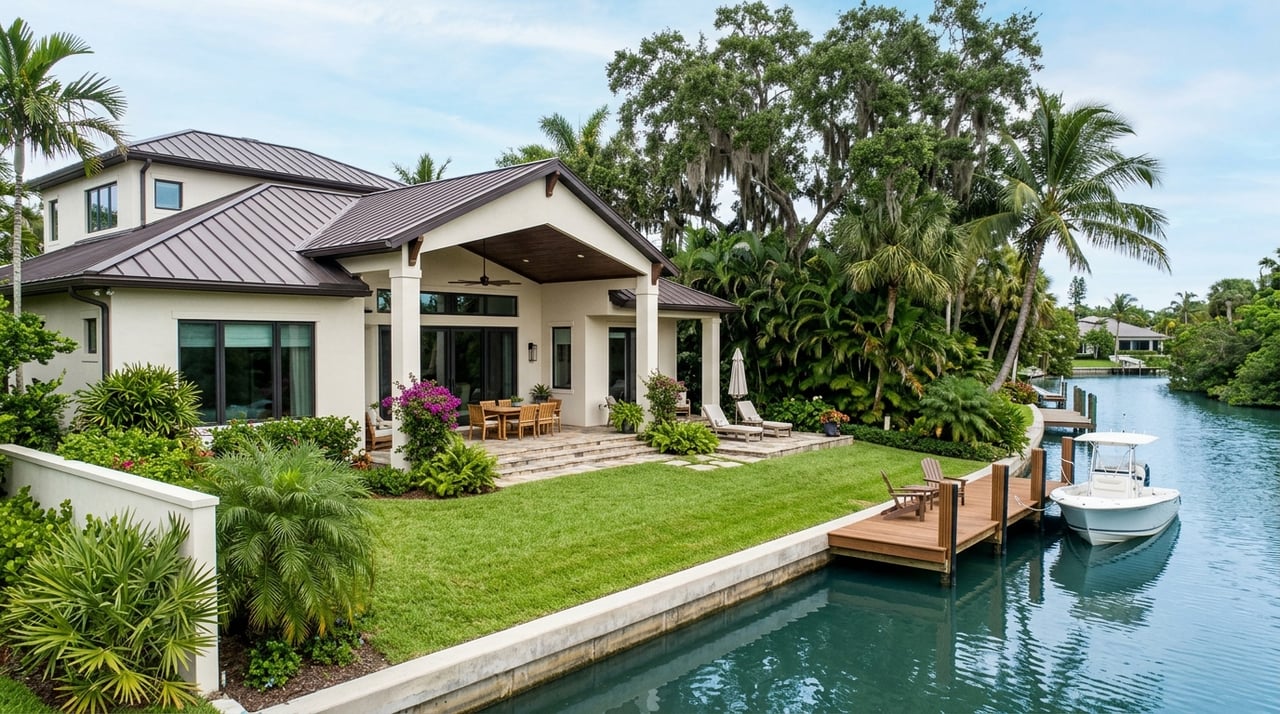
If you are torn between waking up near the sand or living closer to the Intracoastal, you are not alone. In New Smyrna Beach, that choice can shape your daily routine, the kind of property features you prioritize, and even the questions you ask before you buy. This guide will help you compare beachside and riverside living in practical terms so you can focus on the lifestyle that fits you best. Let’s dive in.
New Smyrna Beach Has Two Waterfront Lifestyles
New Smyrna Beach is shaped by two connected but distinct settings: the barrier-island ocean side and the mainland river side. City historic-preservation materials note that historic buildings are found both west of the Intracoastal Waterway on the mainland and on the peninsula that was formerly Coronado Beach.
That geography helps explain why buyers often think about the area as beachside versus riverside. Beachside living is tied to ocean access and time on the sand, while riverside living is more connected to marinas, boat ramps, and the Intracoastal. These are lifestyle distinctions based on local geography and amenities, not formal city labels.
Why Beachside Appeals to Buyers
If your ideal week includes sunrise walks, surf checks, or quick trips to the beach with chairs and coolers, beachside living may feel like the natural fit. This part of New Smyrna Beach is more oriented around ocean access and a walk-to-the-sand routine.
The city’s recreation plan counts 46 dune walkovers, ramps, and beach paths. It also notes that, aside from Flagler Avenue Boardwalk, 27th Avenue Park, Grayce Barck North Beach Community Park, and Esther Street Park, most beach access comes through dune walkovers or pathways.
That access network is a major lifestyle advantage. You are not just buying proximity to the ocean. You are buying the option to make the beach part of your regular routine.
Beach access is a daily convenience
The city says beach-access lands total about 229 acres, which exceeds its adopted beach-access standard. For buyers, that means public access is a meaningful part of how the beachside area functions.
If you value convenience, this matters. A home that lets you reach a walkover or beachfront park quickly can change how often you actually use the beach.
Parking and permits matter beachside
One practical part of beachside living is parking. The city’s beachfront-lot pass covers five lots from Grayce K. Barck North Beach Community Park to 27th Avenue Beachfront Park. Volusia County residents can get that pass at no cost with proof of residency, while non-residents pay $100 annually.
Volusia County also uses a separate permit system for beach driving and off-beach parking. Current visitor rates are $30 daily or $150 annually for on-beach driving, and $20 daily or $100 annually for off-beach parking.
If you are comparing homes, think about how much you want to rely on public lots, permits, or direct walkability. That simple detail can have a big impact on how easy beach days feel.
Why Riverside Appeals to Buyers
If your vision of waterfront living includes boating, marina access, or keeping a dock top of mind, riverside living may be the better match. On this side of New Smyrna Beach, the Intracoastal and riverfront setting shape day-to-day life.
The City Marina sits on the Intracoastal Waterway near the Canal Street Historic District. The city also points to nearby shopping, dining, fine arts, and Old Fort Park’s weekly Saturday farmers market, which adds a strong town-center feel to the river side.
Boating is a key part of the lifestyle
The city maintains North Causeway boat-ramp parking and the Swoope Boat Ramp. Volusia County also operates the Hiles boat ramp, a free ramp suited to canoes and Intracoastal navigation.
For many buyers, these amenities are the real draw. If you picture weekends on the water more than afternoons on the sand, the riverside lifestyle often lines up better with those priorities.
Dock questions become more important
On waterfront or canal-front properties, dock potential can be a major factor. The city’s comprehensive plan states that waterfront single-family residential lots will not be denied riparian rights to construct a dock for two slips per lot.
That does not replace property-specific due diligence, but it does show why riverfront buyers often focus on dock access, boat storage, and how a lot relates to the waterway. These are central questions on the riverside side of the market.
Home Character Can Differ By Side
Lifestyle is not the only difference. Housing character can shift depending on which side of New Smyrna Beach you prefer.
On the river side, the older housing stock is especially visible in the city’s historic core. The New Smyrna Beach Historic District covers about 100 acres along the east bank of the North Indian River and is known for wood-frame vernacular residences and masonry vernacular commercial buildings.
The city says many historic structures date from 1900 to 1930. Common residential styles include Bungalow, Colonial Revival, and Mediterranean Revival.
If you are drawn to older architecture, established streets, and a more historic setting, riverside areas may offer more of that character. Beachside homes, by contrast, often attract buyers who are more focused on ocean proximity and easy access to the shore.
Flood and Insurance Questions Matter on Both Sides
No matter which lifestyle you prefer, waterfront living in New Smyrna Beach comes with practical questions about insurance, flood zones, and storm exposure. These are not reasons to avoid the market. They are reasons to ask smart questions early.
Florida’s Department of Financial Services says flood insurance is usually separate from homeowners coverage. It also notes that Florida law does not require homeowners to carry flood insurance, although a lender may require it.
Flood risk is not the same everywhere
Volusia County flood maps classify inland high-risk zones as A or AE. Coastal high-risk zones with storm-surge exposure are classified as VE.
The county defines Special Flood Hazard Areas as 100-year flood zones. That means buyers should review the flood-map classification for any property they are seriously considering rather than assume all waterfront homes carry the same level of risk.
Beachside may bring more coastal review
Beachside property often raises added construction and rebuild questions because of its proximity to the shoreline. Florida’s Coastal Construction Control Line program regulates structures and activities that can contribute to beach erosion, destabilize dunes, damage upland property, or interfere with public access.
If a parcel falls seaward of the Coastal Construction Control Line, special siting and design criteria can apply. For buyers looking close to the ocean, this is an important part of due diligence.
Hurricane deductibles are part of planning
Florida also uses a hurricane deductible that applies on an annual basis to covered hurricane losses. The Florida Department of Financial Services says insurers must offer deductible options that include fixed-dollar and percentage choices.
This is one reason your insurance review should go beyond the base premium. Understanding the deductible structure can help you plan more clearly for the true cost of ownership.
How to Choose the Better Fit
There is no universal winner between beachside and riverside living in New Smyrna Beach. The better choice depends on how you want to live most days, not just how you want the property to look in photos.
Here is a simple way to think about it:
- Choose beachside if you want the beach to be part of your regular routine.
- Choose riverside if you want boating, marina access, or dock-focused living.
- Expect more parking and permit logistics on the beachside.
- Expect more dock, channel, and waterfront-lot questions on the riverside.
- Review flood, insurance, and storm-related details on either side before you commit.
If you are still weighing both options, start by thinking about your weekly habits. Do you want to walk to the sand before breakfast, or do you want easier access to the boat ramp and marina? That answer usually points you in the right direction.
A Smart Buying Strategy in New Smyrna Beach
When you compare homes in New Smyrna Beach, it helps to look beyond price and square footage. The right choice often comes down to access, routines, and the practical details tied to each waterfront setting.
A well-informed search should include questions about beach access, parking options, flood-zone classification, insurance structure, marina or ramp proximity, and dock potential where relevant. When you line those factors up with your daily lifestyle, the right side of town usually becomes much clearer.
If you want clear, high-touch guidance as you compare coastal properties and waterfront tradeoffs, connect with Anthony Consalvo for personalized advice.
FAQs
What is the difference between beachside and riverside living in New Smyrna Beach?
- Beachside living is centered on ocean access, dune walkovers, and beach parks, while riverside living is more connected to the Intracoastal, marinas, boat ramps, and dock-related features.
What should buyers know about beach access in New Smyrna Beach?
- The city’s recreation plan counts 46 dune walkovers, ramps, and beach paths, with major access points including Flagler Avenue Boardwalk, 27th Avenue Park, Grayce Barck North Beach Community Park, and Esther Street Park.
What parking permits apply to beachside living in New Smyrna Beach?
- The city’s beachfront-lot pass covers five lots, with free access for Volusia County residents who show proof of residency and a $100 annual cost for non-residents; separate county permits apply for beach driving and off-beach parking.
What makes riverside living appealing in New Smyrna Beach?
- Riverside living appeals to buyers who want boating access, proximity to the City Marina, nearby boat ramps, and a town-center setting near Canal Street and Old Fort Park.
What should buyers ask about dock rights for riverside homes in New Smyrna Beach?
- Buyers should ask about lot-specific dock conditions and waterfront access, especially since the city’s comprehensive plan says waterfront single-family residential lots will not be denied riparian rights to construct a dock for two slips per lot.
How do flood zones affect homes in New Smyrna Beach?
- Volusia County classifies inland high-risk flood zones as A or AE and coastal storm-surge zones as VE, so buyers should verify the flood-map classification for each property they consider.
What insurance questions matter for waterfront homes in New Smyrna Beach?
- Buyers should remember that flood insurance is usually separate from homeowners insurance in Florida, and they should also review hurricane deductible options as part of the full cost of ownership.